Choosing guide · Drinks
Tonic Water for a Non-Alcoholic G&T
The mixer is two-thirds of the published liquid recipe. Give it a place in the shopping plan.
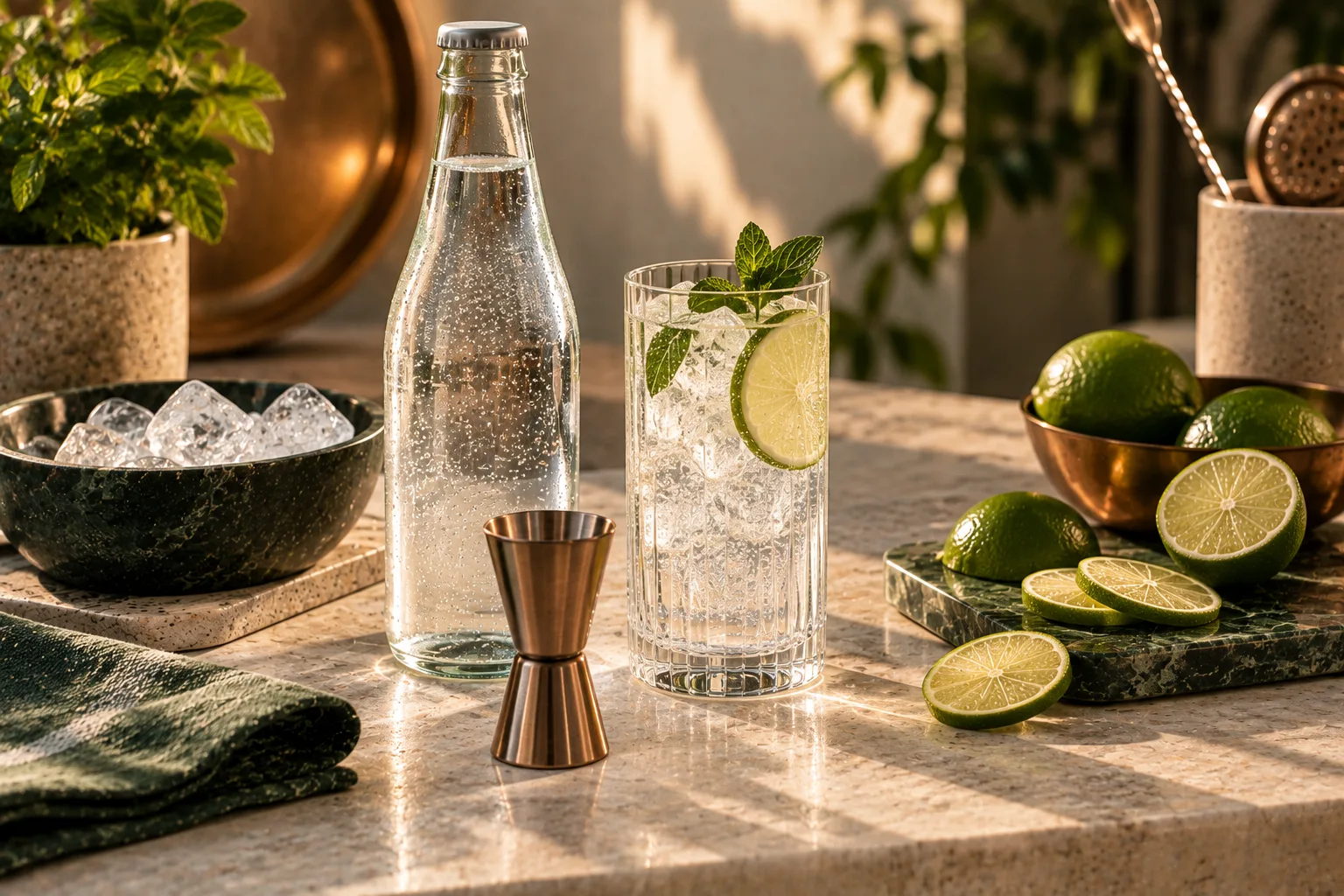
Illustrative still life, not a photograph of the attributed recipe
A gin-alternative bottle can be the expensive decision, but it is not the whole drink. Ritual Zero Proof’s published G&T uses 2 fl oz of Gin Alternative and 4 fl oz of tonic. The tonic is therefore twice the base by volume. Forgetting it is not a minor garnish problem; it leaves the recipe unfinished.
Start with the actual mixer
For this specific recipe, tonic water is the documented mixer. Sparkling water is not a like-for-like substitution in the source recipe, and a flavored tonic changes the ingredient list again. You may prefer another build, but its result is not established by Ritual’s published G&T. Decide which drink you are making before comparing bottles of mixer.
Read the exact tonic’s label for serving size, sugar and ingredients if those matter to your choice. “Tonic” is a category name, not a fixed nutrition profile. The bottle or can in your hand—not the color of its label—supplies that information. We have not tasted different tonics, so this is a buying and serving recommendation, not a flavor ranking.
The six-drink basket
At Ritual’s published ratio, six complete drinks require 12 fl oz of Gin Alternative and 24 fl oz of tonic, plus ice and the lime-wheel garnish if you want the brand’s presentation. That is approximately 355 ml of base and 710 ml of tonic. A 750 ml bottle of base covers the six pours with room left over; the amount of tonic depends on the exact package size you choose. Read the fluid-ounce volume on that package and add enough whole units to reach at least 24 fl oz. Do not assume a “six-pack” means six finished G&Ts.
For one or two glasses, a small sealed tonic format may be easier to finish while it is lively. For a planned run of six, compare the total tonic volume and how quickly the opened package will be served. That is a format judgment, not a claim that one tonic tastes better.
Choose the format around the moment
A larger bottle reduces the number of packages on the table but asks you to use the opened mixer promptly if carbonation matters to your serve. Single-serve units let you open tonic as guests ask for it, at the cost of more containers. Neither choice changes the 4 fl oz per glass in the documented recipe. Keep the tonic cold, measure the base, top with tonic, and stir gently as Ritual instructs.
If you are comparing the specialty base first, use our gin-alternative guide. If the bottle is already chosen, the full G&T recipe shows the glass and method. The useful sequence is base, mixer volume, then serving format—not three disconnected purchases.
- Ritual Zero Proof — Non-Alcoholic Gin and Tonic Recipe
- Ritual Zero Proof — Gin Alternative product information
Product information was checked for the US market on September 23, 2026. Check the exact current label before buying; package, availability, and storage instructions can change.