Home Bar · Glassware
One Good Glass for Most Mocktails
Start with the liquid volume, ice and method of the drinks you will actually make.
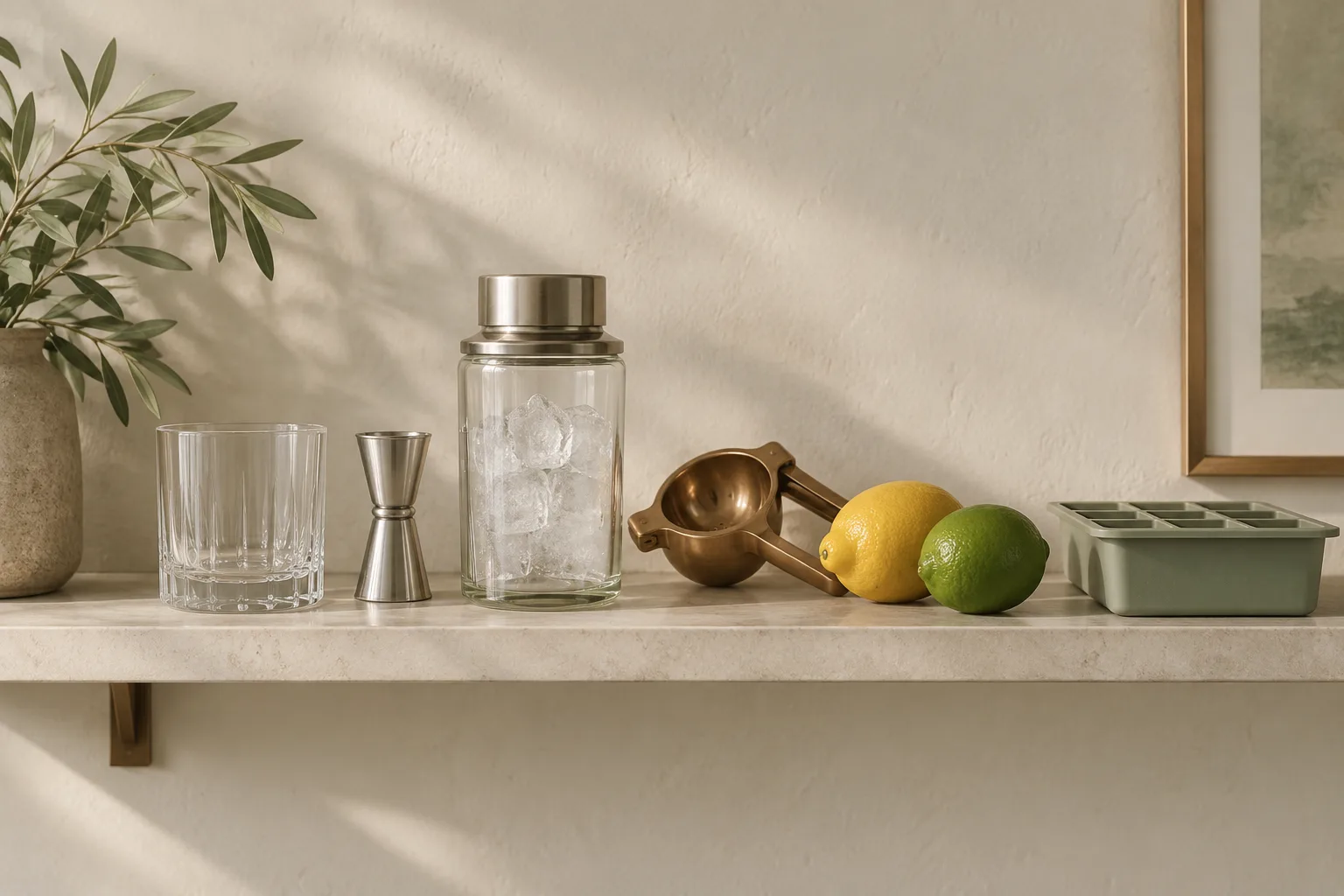
The first useful mocktail glass might already be in your cupboard. What matters is whether it can hold the drink you have actually chosen, including ice and enough room to lift it without wearing the last ounce. A beautiful glass that makes a published recipe overflow is not a better first purchase than an ordinary one that does the job.
Start with two recipes rather than a shopping category called “mocktail glassware.” Ritual Zero Proof's published G&T uses 2 fl oz Gin Alternative and 4 fl oz tonic water. That is 6 fl oz of liquid before ice and lime wheels; the brand calls for a highball glass filled with ice. Ghia's A Night at the Spritz uses 2 fl oz Original Apéritif and 3 fl oz sparkling water, or 5 fl oz of liquid before ice, rosemary and orange zest; Ghia specifies a wine glass on the rocks.
Those numbers do not prove that a glass with a printed 6 fl oz capacity will hold the G&T. A capacity figure may describe volume to the rim rather than usable headroom after ice; check what the seller actually measured. The two recipes also show why a single silhouette is not a universal rule: the brands specify different vessels, while the liquids themselves are close in measured volume.
A capacity-first check
| Question | Ritual G&T | Ghia spritz |
|---|---|---|
| Liquid before ice | 6 fl oz | 5 fl oz |
| Source vessel | Highball glass | Wine glass |
| Additional space | Ice and lime wheels | Ice, rosemary and orange zest |
| Practical purchase test | Can the intended glass hold the assembled serve without crowding the rim? | Can it do so while keeping the garnish usable? |
The practical check is for your own vessel. If you already have a sturdy glass with comfortable spare room, use it before buying a matching set. You can compare the printed capacity with the recipe's liquid volume, then judge the space needed for the ice and garnish you plan to use. If the manufacturer does not give a capacity, a marked kitchen measure can help you understand your glass at home. A capacity comparison is not a ranked list of glassware.
A glass has more than one job
The first is holding the full serve. The second is making the method practical. A recipe built over ice needs an opening that allows you to add ice and measure the liquids without juggling them. A garnish should not occupy the entire rim. The third is storage: six ornate glasses that have no comfortable shelf space are a poor answer to a plan for one weeknight drink.
There is a visual decision too, but it comes after those jobs. A wine glass may make a spritz feel like a dinner-table drink; a tall glass can make a highball easy to recognize. Neither shape changes Ghia's 2-to-3 ratio or Ritual's 2-to-4 ratio. If you want to follow the brand's vessel exactly for a particular recipe, do so. If the aim is one starter glass for several drinks, choose a practical compromise and keep the source method visible.
Do not buy a coupe because a recipe image looks elegant if your first planned drinks are both poured over ice. Do not buy an oversized tumbler solely because it makes a six-ounce liquid quantity look sparse. The appearance of empty space in a product photo is not a measurement problem. The actual spill margin and your storage space are.
When a second shape earns its shelf
A second style becomes useful when a recipe you will really repeat asks for a different operation that your first glass makes awkward: a short stirred drink, a warm serve, or a fragile garnish that needs more open surface. Name the recipe first. Then buy the vessel for its job, not to complete a set.
For now, the quiet decision is enough: read the liquid volume, account for ice and garnish, check the glass you own, and only shop if it fails that task. That is a more reliable beginning to a home bar than a box labeled “essentials.”
- Ritual Zero Proof — Non-Alcoholic Gin and Tonic recipe
- Ghia — A Night at the Spritz recipe