Hosting guide · Hosting & Gifts
Set Up a Drinks Table in Three Lanes
Give guests one ready option, one simple mixed drink, and water they can see without asking for it.
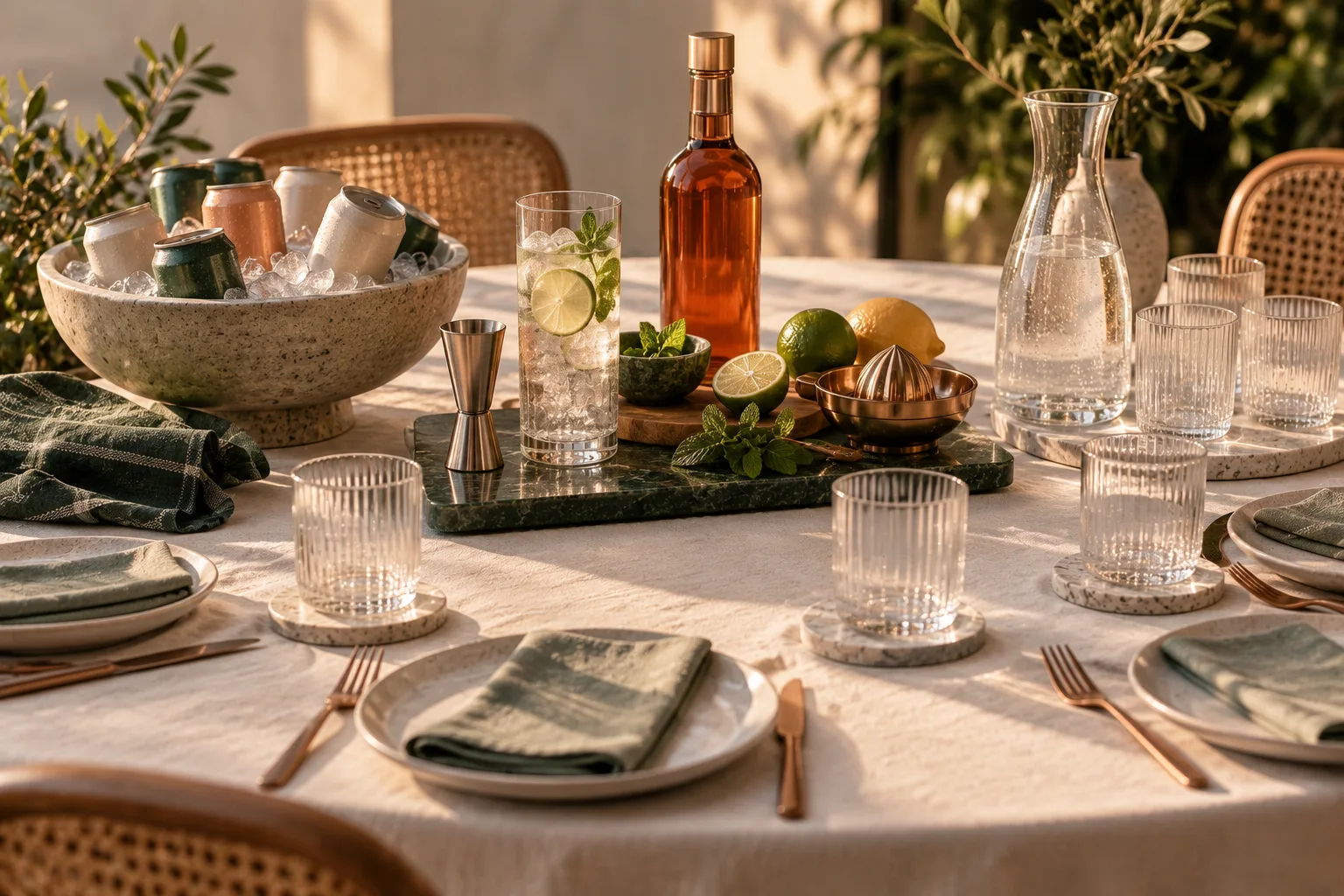
A small drinks table should feel like an invitation, not an ordering counter. The host’s job is not to provide every imaginable option. It is to make a few good choices legible: something that can be opened and poured, something that can be mixed without a queue, and water that is present as a real choice rather than a fallback.
Ready to pour
This lane is for a complete can or bottle that needs only chilling and a visible label. It is the easiest option for a guest who does not want to ask for a custom drink, and it gives the host a reliable first pour while other things are happening.
Count units, not just packs. If a container is one serving, the plan is straightforward. If a bottle is meant to be divided, use the stated bottle volume and a defined glass pour before assuming how far it will go.
One simple mixed drink
Choose one serve with a documented ratio and a short ingredient list. A G&T-style drink or a citrus highball is usually easier to run than a menu of three recipes. Count the base and mixer separately so the table does not run out of one before the other.
Set the measure, ice, citrus, and glassware in one small working zone. Build individual drinks close to serving; keep carbonation and ice as final steps unless the recipe source says otherwise.
Water that belongs on the table
Cold water is a real option, not a fallback. Put it in the same visible space so the choice does not require a conversation or a trip to the kitchen. A carafe, chilled bottles, or a simple ice bucket all work when they are easy to reach.
That third lane is what keeps the first two from becoming a test of enthusiasm. Guests can choose the amount of effort and flavor they want without having to explain themselves.
The detail that changes the plan
The lanes also create a simple service timeline. The ready option can be cold before the doorbell. The water can be set out at the same time. The mixed lane can remain a small station until someone wants it, with the base, mixer, ice, and measure together. Nothing on the table needs an explanation longer than a sentence.
For six people, plan the first round rather than every possible second round. That means six available glasses, enough ice for the drinks that actually use it, and a count of the base and mixer separately. If the group changes its mind, unopened cans, bottles, or sparkling water are more useful than a premixed pitcher that has already lost its fizz.
Put it to work
Set the table according to service effort, not according to drink categories. Put the ready option where a guest can help themselves, keep the mixed option small enough to run calmly, and place water in the same visual field.
Before you decide
- Cold ready-to-pour units with their labels visible
- A single documented mixed-drink ratio
- Enough base, mixer, ice, and glasses for the planned first round
- Water placed beside—not behind—the other choices
Three clear lanes make a modest table feel generous because every guest can understand the choices at a glance.
This is a practical planning framework developed by The Dry Glass, not a product test or a published recipe.