Label guide · Learn
Non-Alcoholic, Alcohol-Free and 0.0
Read the exact label. The shortest wording is not always the whole answer.
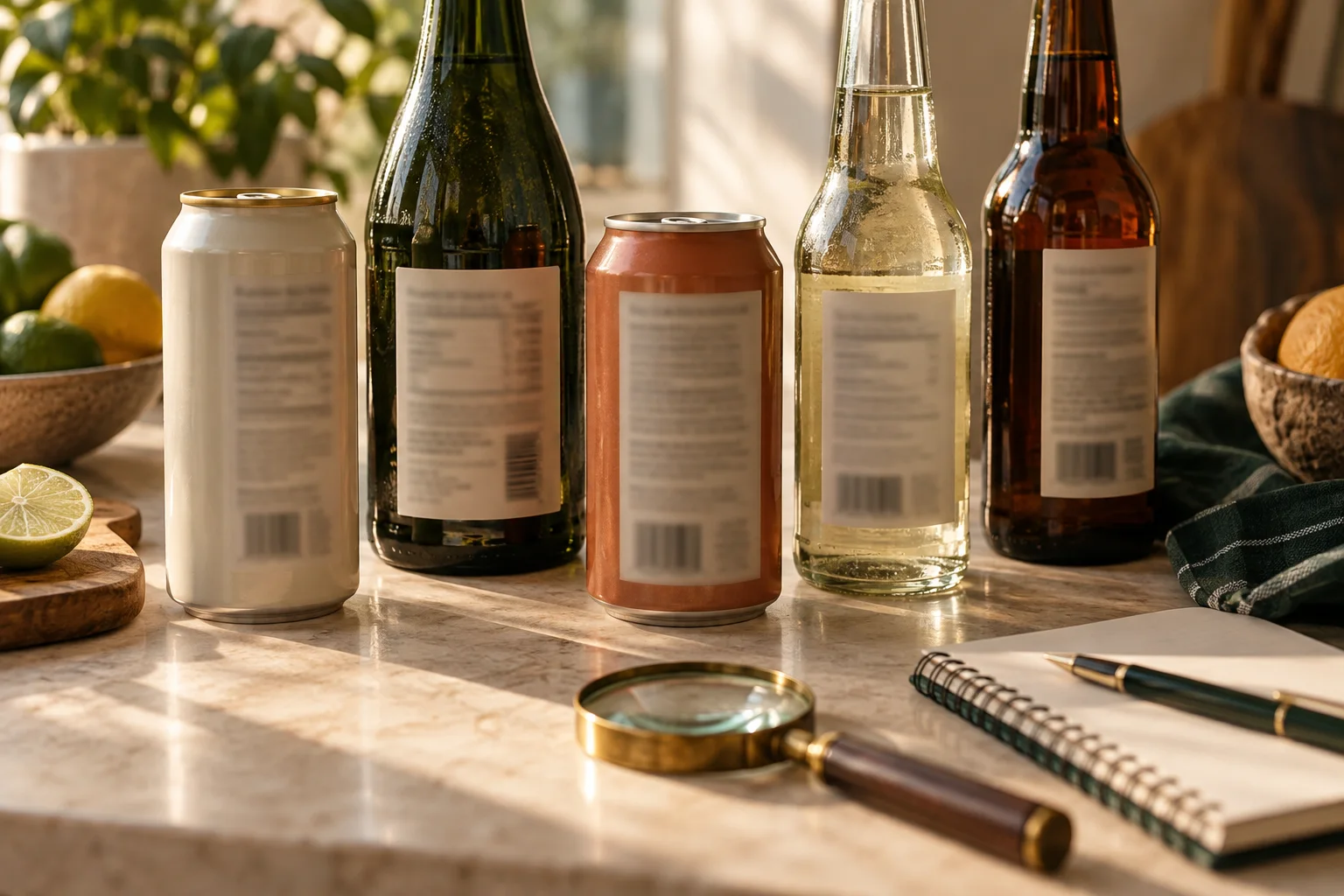
Non-alcoholic, alcohol-free, 0.0, and alcohol-removed are not universal synonyms. The product category, exact reference, region, and label all matter.
For US malt beverages, the TTB draws a line
The Alcohol and Tobacco Tax and Trade Bureau says a malt beverage labeled non-alcoholic must contain less than 0.5% alcohol by volume and show the required adjacent statement. It says alcohol free may be used only when the malt beverage contains no alcohol.
That rule is useful and specific. It is not permission to paste the same definition onto wine alternatives, botanical drinks, or every canned mocktail.
TTB's own compliant sample label makes the first check unusually clear: non-alcoholic appears beside the statement contains less than 0.5% alcohol by volume. That is a regulator's illustrated example, not a can The Dry Glass bought or examined. It gives you a place to look on a real US malt-beverage label; it does not tell you the precise alcohol content of every product using the term.
What a front label does not prove
Non-alcoholicdoes not automatically mean 0.0%.Alcohol-removeddescribes a process category; check the final ABV statement.Drydoes not prove low sugar.- A product family name does not prove every flavor has the same formulation.
- A retailer title is not a substitute for the exact label or manufacturer information.
A 0.0% statement is a numerical claim about the named product. It is not a translation of every non-alcoholic label. If a drink began as wine and was then dealcoholized, alcohol-removed tells you about the process; the finished bottle's own alcohol statement answers a different question. Keep those two pieces of information together rather than treating either as a shortcut.
Check the exact bottle or can, not just the search result: alcohol statement, serving size, ingredients, caffeine or active ingredients, allergen information, and storage after opening. If a field is missing, treat it as unknown.
For a quick shelf check, write down the product name and market first. Then copy its alcohol wording exactly, including a percentage if one is given. Only after that should you compare serving size or other label fields. This order is less elegant than assuming every bottle in a category means the same thing, but it prevents a gift or a shared drink from being described more confidently than its packaging allows.
- TTB — Malt Beverage Labeling: Alcohol Content
- TTB — Malt Beverage Label Examples, compliant non-alcoholic sample
Regulatory example and guidance checked September 23, 2026; no product label physically examined.