Drinks · Dinner format
Still or Sparkling Non-Alcoholic Wine for Dinner
Choose the service role of a still or sparkling bottle before making a taste claim.
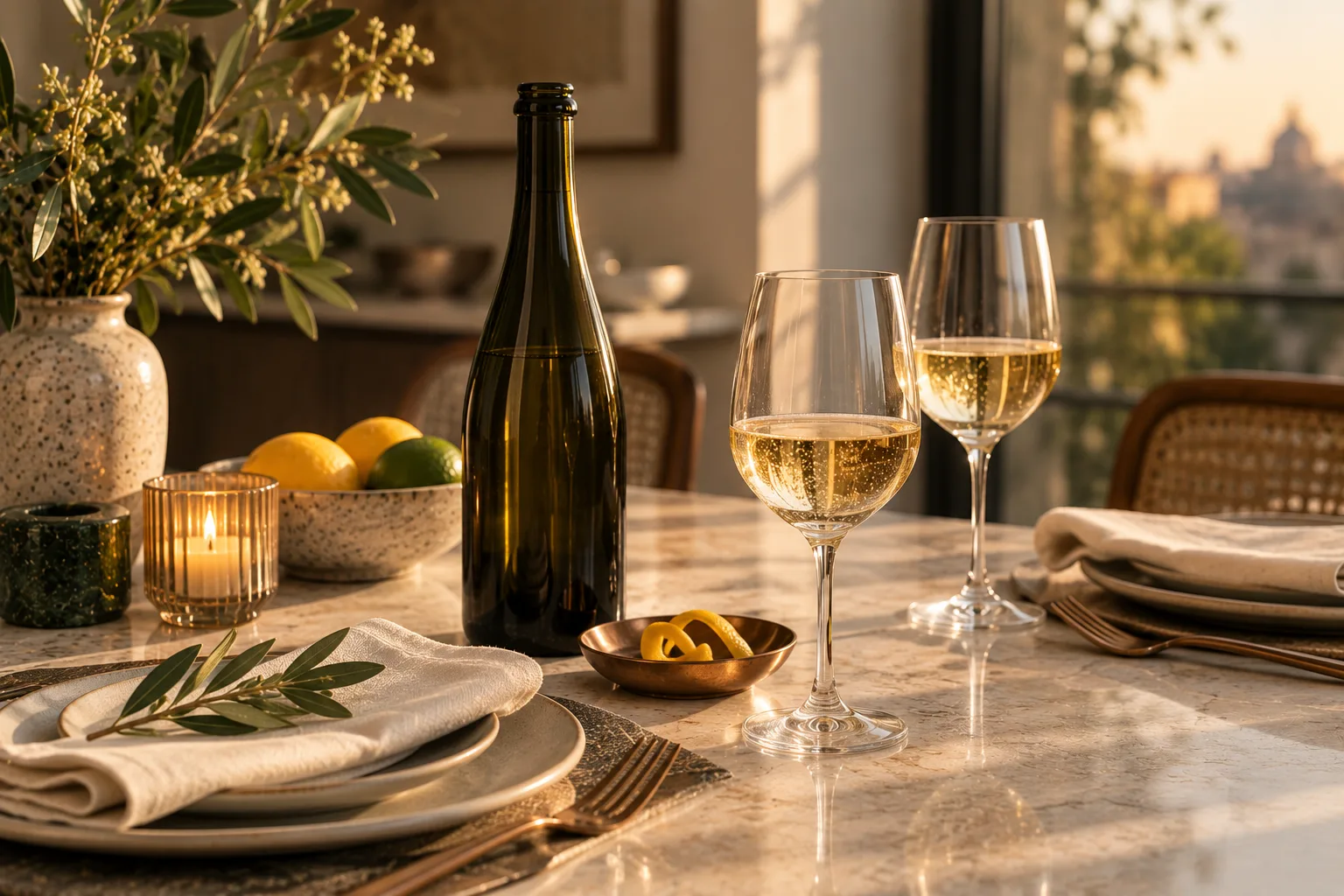
Dinner does not automatically call for a bottle with bubbles. It calls for a drink that fits the service: a short opening toast, a glass someone may return to through the meal, or both. Three US product pages from two producers make the more useful differences visible: format, alcohol wording and what to do with an opened bottle. Those facts can shape a table plan without turning still versus sparkling into a taste contest.
Giesen Wines USA lists a 750 ml alcohol-removed Sauvignon Blanc and a 750 ml alcohol-removed Sparkling Brut. Both pages say to serve their named bottle chilled and refrigerate after opening to maintain quality, and both declare no more than 0.5% Alc/Vol. Those are product-specific statements, not evidence that the still bottle is “better with food” or the sparkling bottle is “only for toasts.” Freixenet Mionetto USA provides another named 750 ml sparkling example whose page declares a final range between 0 and 0.05%; it must not be substituted for Giesen's alcohol statement.
Decide whether the bottle has one moment or several
| Dinner plan | What to count first | Why the format may help |
|---|---|---|
| Opening toast | Number of people choosing it and pour size | A sparkling bottle can be opened for a defined moment |
| Glasses through the meal | First pour, possible second pour and remainder | A still bottle can be handled as an ongoing table option, subject to its own storage instruction |
| Toast plus meal option | Two different roles and potentially two bottles | One bottle need not be forced to do both jobs |
These are editorial service roles, not rules about how wine must be enjoyed. A guest may want sparkling through a meal or still wine only for the first glass. The meaningful decision is whether opening a full bottle creates more product than the table is likely to use, and whether the producer's after-opening guidance fits your plan. Giesen's still Sauvignon Blanc explicitly asks for refrigeration after opening. Do not invent a universal storage window from that sentence, and do not apply it to Freixenet or another bottle without checking their directions.
Put a defined pour behind the bottle count
A 750 ml bottle is approximately 25.4 US fl oz. If six guests each choose a 4 fl oz first pour, one bottle theoretically covers six complete pours with a small remainder before spills or foam. If the plan is a 3 fl oz toast, the same bottle theoretically covers eight complete pours. Those are our planning calculations, not producer serving instructions or a forecast of consumption. For twelve 4 fl oz toasts, two bottles meet the theoretical minimum; practical reserve is a separate choice. The math works for a 750 ml still or sparkling bottle, but it says nothing about how long an opened sparkling bottle retains its carbonation.
Two bottles are not automatically more thoughtful. If only two guests want an alcohol-removed wine and others prefer a can, a mocktail or water, a full still-and-sparkling pairing may create unnecessary opened leftovers. One bottle for a clear role and another kind of drink for the rest of the menu may be better. Conversely, if the table explicitly wants a toast and a wine-like option through dinner, keeping those roles separate makes the shopping list easier to understand.
Keep each bottle's wording with that bottle
The producer name, variant and US market matter. Giesen's still Sauvignon Blanc declares no more than 0.5% Alc/Vol on its US page, even though the range name includes “0%.” Freixenet's sparkling product page declares a narrower range for a different bottle. Do not merge those statements into one category-wide definition. Check the current physical package if the exact alcohol condition is important to a guest. Similarly, a producer's dry or crisp description is its marketing language, not a sugar calculation or our tasting note. A nutrition comparison would require the actual panels and matching serving sizes.
The dinner choice is therefore practical before it is aspirational: choose the service moment, count the people choosing that option, decide a pour, then read the exact bottle's alcohol and after-opening statements. Still and sparkling can both belong at dinner. What matters is whether the bottle you open has a clear job at your table.
- Giesen Wines USA — Non-Alcoholic Sauvignon Blanc and Sparkling Brut
- Freixenet Mionetto USA — Alcohol Removed Sparkling White