Format guide · Drinks
When a Can Is the Better Serve
A can can reduce open-bottle leftovers, simplify chilling, and make the serving count visible before guests arrive.
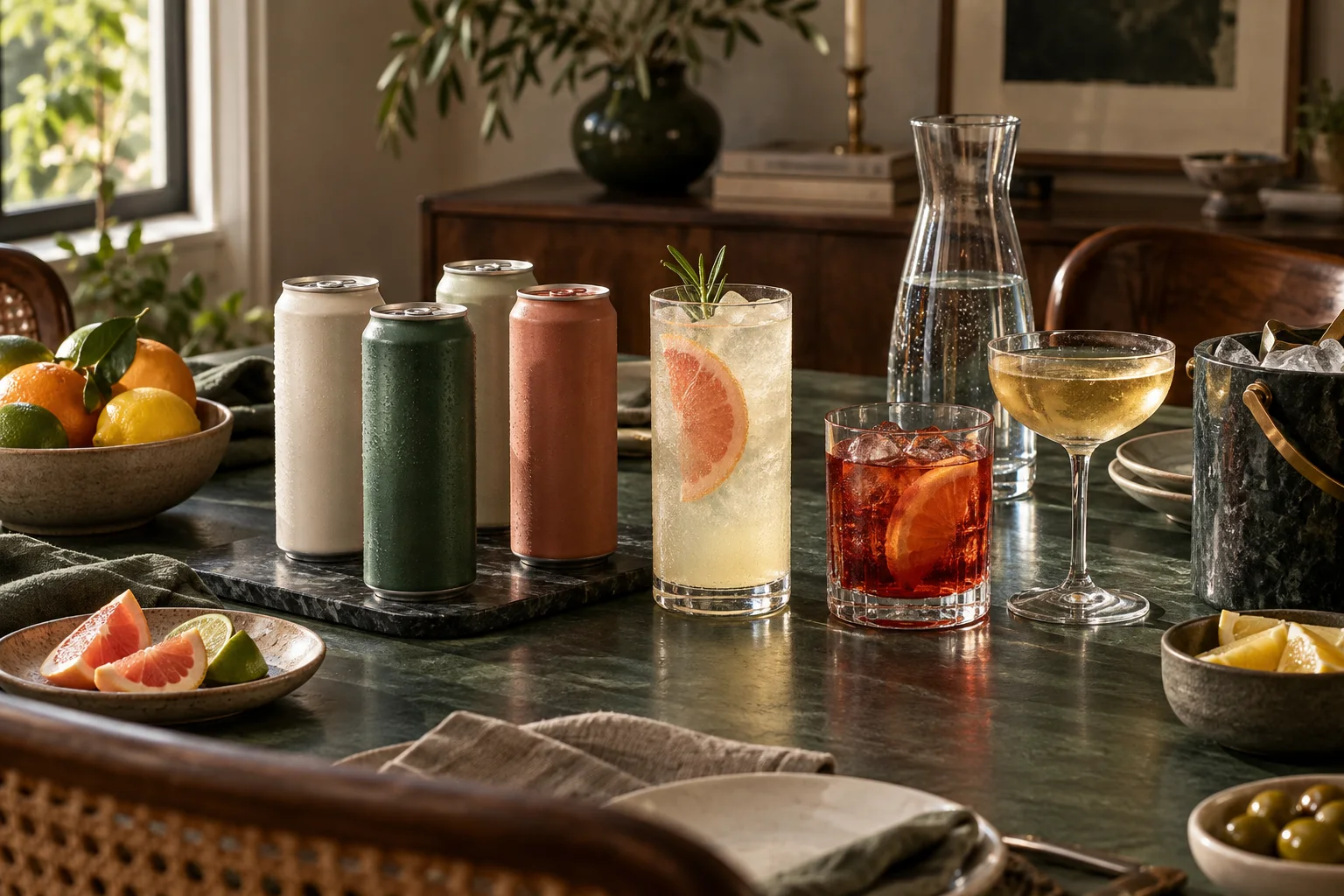
The can-versus-bottle decision is not about which package looks more premium. It is about what must be opened, finished, chilled, transported, and understood by the person serving it.
Count finished serves not containers
A single can can equal one complete serve, while a bottle may be a base for several mixed drinks. Write down the finished drink, then count the containers required. That small shift is often more useful than comparing shelf prices alone.
The label belongs to the unit you will pour
FDA’s serving-size guidance matters here. Nutrition and ingredient numbers attach to the package’s stated serving, not to an imagined glass. A multi-serve package needs a multiplication step before it belongs in a party plan.
A can is not automatically less wasteful
It can prevent an open bottle from lingering. It can also create more individual packaging. The relevant judgment depends on the number of guests, the need for variety, and whether the remaining product has a documented use tomorrow.
The detail that changes the plan
For one person, a can can make the most sense when the alternative is opening a bottle intended for several mixed drinks. For a group, its strength is flexibility: guests can choose one unit, labels stay attached to the drink, and unopened extras remain unopened. That is particularly useful when the table has more than one flavor or format.
A bottle can still be the calmer choice when every guest will share the same documented serve. In that case, do the yield calculation first, chill the right amount of mixer, and decide what the opened bottle requires afterward. The package is not the answer; the service plan is.
Put it to work
Choose a can when a complete, cold, individual serve will reduce uncertainty for the host or the guest. Choose a bottle when the same drink will be poured repeatedly and its post-opening plan is clear.
Before you decide
- Finished serves, not package count
- Whether the full container is one stated serving
- Cold storage for the actual number of units
- A realistic plan for unopened and opened extras
A can earns its place when it makes service simpler. It does not need to win a style contest to be the sensible format.
- FDA — How to Understand and Use the Nutrition Facts Label