Home Bar · Method
Do You Need a Cocktail Shaker for Mocktails
The tool earns its space when the recipes you repeat actually ask you to shake.
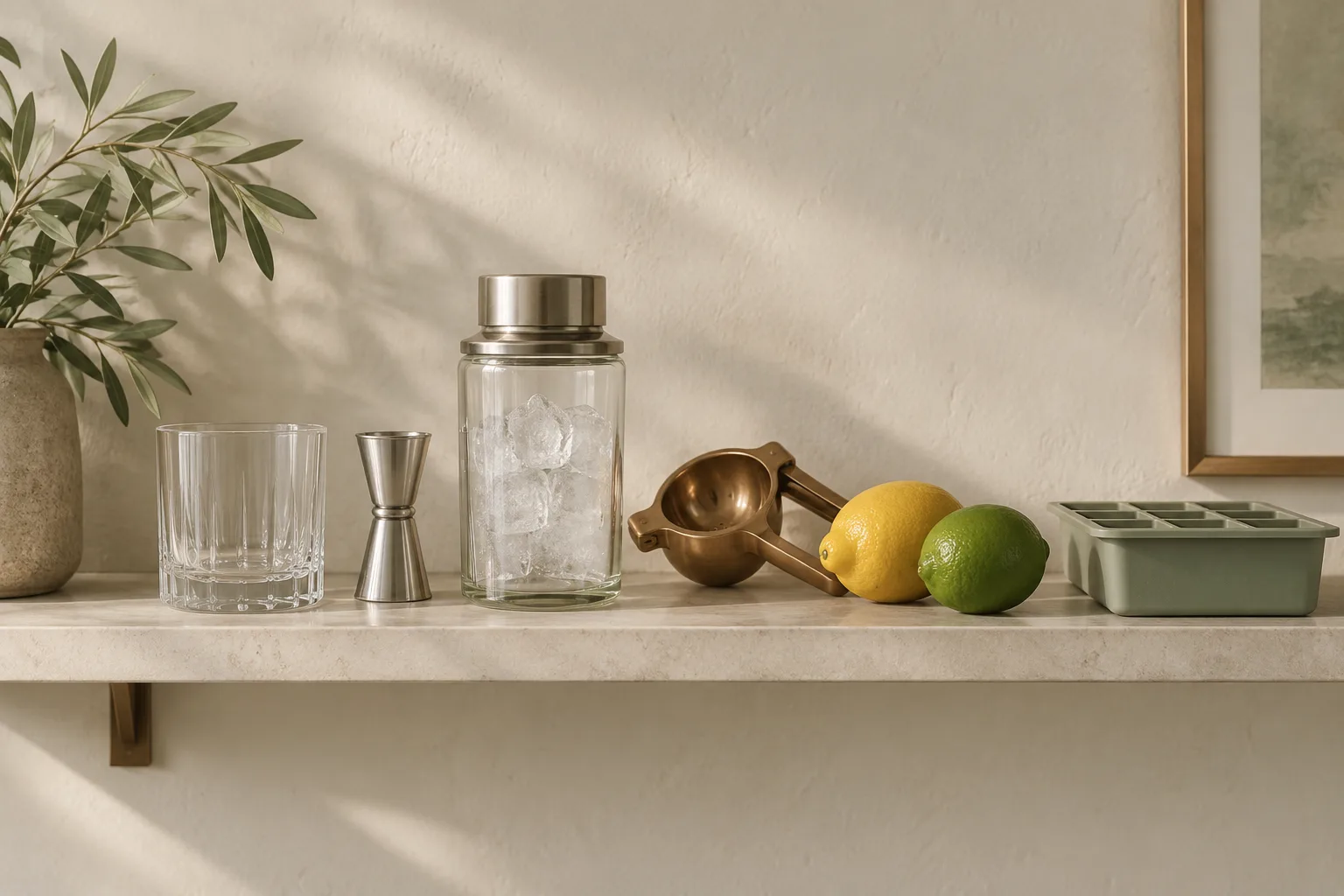
The shaker is the most photogenic tool on a bar cart and often the least urgent one. If the drinks you actually plan to serve are built in the glass, it has no step to perform. Read the method of two or three real recipes before buying a tool for the category called “mocktails.” The recipe, not the category, decides.
Ritual Zero Proof's G&T puts 2 fl oz Gin Alternative and 4 fl oz tonic water over ice in a highball and asks for a gentle stir. Ghia's A Night at the Spritz puts 2 fl oz Original Apéritif and 3 fl oz sparkling water over ice in a wine glass and also calls for gentle stirring. Neither source asks you to close those sparkling ingredients in a shaker. If those are your repeat drinks, you need a reliable measure, the right glass and a spoon before you need specialized shaking equipment.
Three methods, three tool decisions
| Source drink | What the source does | Tool that performs the job |
|---|---|---|
| Ritual G&T | Build over ice, add tonic, stir gently | Measure and long spoon |
| Ghia spritz | Add liquids over ice, stir gently | Measure and spoon |
| Ritual Whiskey Sour | Combine still liquids, add ice, shake and strain | Shaker and straining method |
The Whiskey Sour changes the answer. Ritual's Sweet & Sour recipe specifies 2 fl oz Whiskey Alternative, 3/4 fl oz fresh lemon juice and 1/2 fl oz simple syrup, with egg white or aquafaba optional. Its method combines the still ingredients in a shaker, adds ice, shakes for 15–20 seconds and strains into a glass of ice. That is a genuine shaking task. Do not replace it with a gentle stir and describe the result as the published recipe; equally, do not treat an optional foaming ingredient as mandatory shopping.
What to do if you own no shaker
A dedicated shaker is the straightforward choice if you intend to repeat shaken recipes. For a first attempt, a clean, food-safe container with a lid designed to close securely can perform a mixing task, but that is a household workaround, not a method the brand has validated with your particular jar. Check the closure, fill level and material, keep it away from breakable surfaces, and strain with a suitable kitchen sieve if needed. If the container cannot be secured confidently, do not use it. Never shake carbonated tonic or sparkling water in a closed vessel; add those ingredients in the glass as their source recipes instruct.
There is no prize for doing every drink with the same movement. A highball made in its serving glass saves a wash-up step; a sour with fresh citrus and syrup follows a different published method. The reason to buy a shaker is that you will repeat the second job often enough for a purpose-built tool to be more convenient than the equipment you already own. The reason to wait is equally concrete: your first two drinks do not ask for it.
Check the purchase against your own menu
Write down your next three drinks and mark each as built, stirred or shaken according to its source. If all three are built or gently stirred, a shaker would be mostly storage. If two are shaken, a clear measure, secure shaker and workable strainer may earn their shelf space together. If just one is shaken for a special occasion, borrowing a tool or using a suitable existing container may be more sensible than buying a set.
The published methods tell you which step needs a tool; your own kitchen decides whether you already have one that fits. Buy a new tool when the repeated step exists, not to make the shelf look complete.
- Ritual Zero Proof — Gin & Tonic recipe
- Ritual Zero Proof — Sweet & Sour recipe
- Ghia — A Night at the Spritz recipe