Home Bar · Ice method
Ice for Mocktails and What the Recipe Actually Says
Three official recipes put ice in different places; let that method guide the equipment.
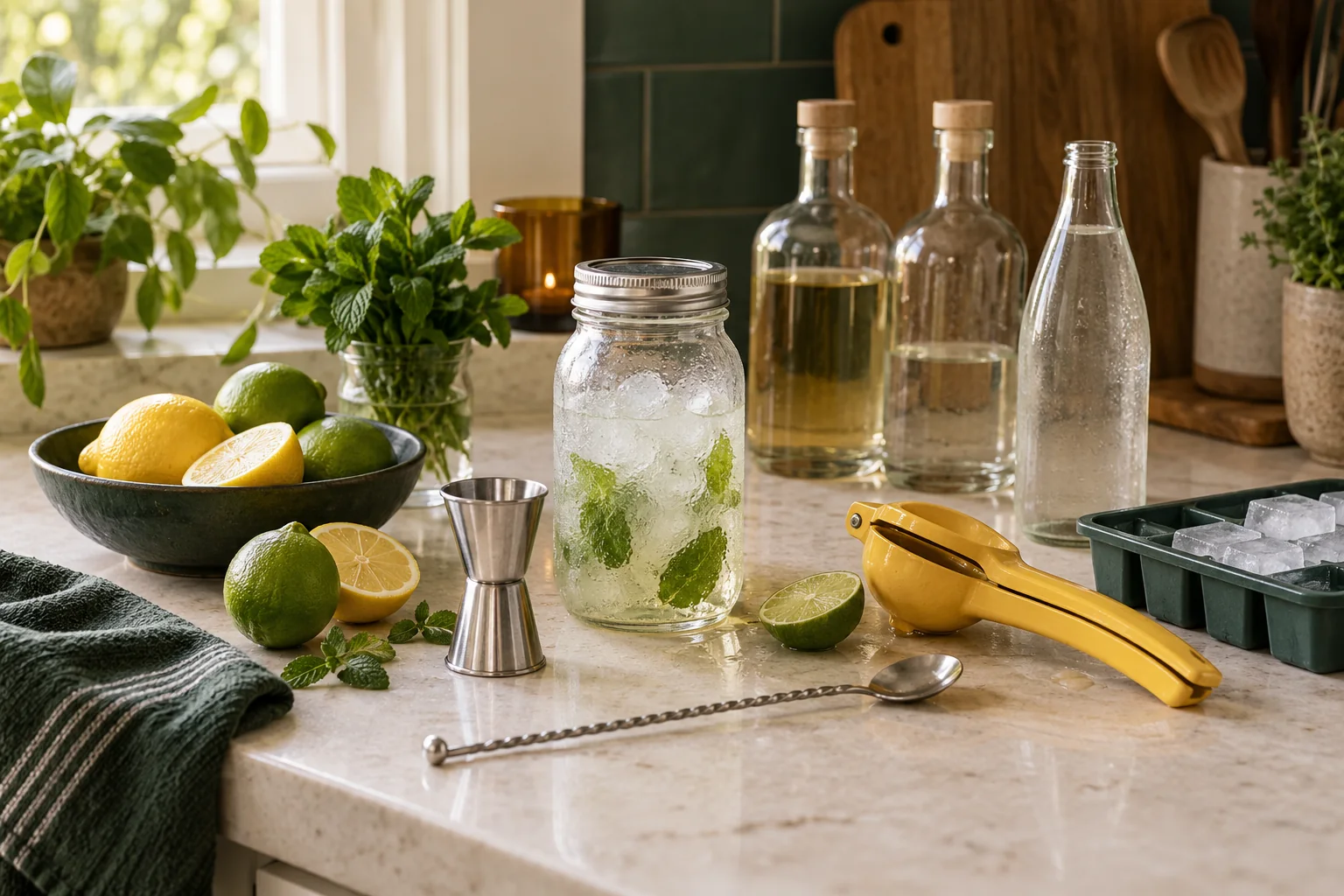
Ice can look like the most generic thing in a drink, until a recipe tells you precisely when it belongs. Ritual Zero Proof builds its Gin & Tonic in a highball filled with ice before adding base and tonic. Its Sweet & Sour uses ice in a shaker before the drink is strained. Ghia serves A Night at the Spritz on the rocks in a wine glass. These are three different jobs for ice, and none requires a home bar to buy a sculptural cube tray before making a first drink.
A source may prefer a large cube or ask for a full highball of ice, but these recipes do not establish a universally superior cube size. The better first question is not “Which ice is premium?” but “What does the drink I am actually making ask me to do?”
Follow the place where the ice enters
| Published drink | Ice direction | What a home maker must prepare |
|---|---|---|
| Ritual Gin & Tonic | Fill a highball glass with ice, then add 2 fl oz base and 4 fl oz tonic | Ice for the serving glass; tonic added near service |
| Ritual Sweet & Sour | Shake the measured still ingredients with ice, then strain into a glass filled with ice | Ice for both shaker and serving glass |
| Ghia A Night at the Spritz | Serve 2 fl oz Original and 3 fl oz sparkling water on the rocks in a wine glass | Ice in a wine glass and a gentle stir, not a shaken carbonated drink |
The difference between shaking and building matters more than the shape of a photograph's cube. A shaker method asks you to combine the drink with ice, then separate the ice from the liquid as directed. A built sparkling drink asks for ice in the serving vessel and a gentle finish. Shaking tonic or sparkling water because another recipe uses a shaker would change the documented method.
Count ice tasks, not just drinks
Suppose you plan four Ritual G&Ts for a first round. You need four ice-filled highballs, plus the published 8 fl oz Gin Alternative and 16 fl oz tonic for those four glasses. The source does not specify an exact ice mass per highball, so we cannot convert “four glasses” into a defensible number of pounds or trays. Fill one glass according to the method you intend to use, note what your household ice supply can cover, and make sure the freezer or purchased ice can repeat the task. That is practical planning, not a claim about optimal dilution. When the ice is ready, the full Ritual G&T guide brings the measures, tonic and lime together for each glass.
Four Sweet & Sours are different. The shaking step needs ice in the tool for each source drink, and Ritual also says to strain into a cocktail glass filled with ice. A group count may require repeated shaking, but multiplying the ingredients does not establish that four servings fit in one shaker. Capacity and handling remain part of the method. If the equipment is too small, make the source's individual drink sequentially.
Keep the limit visible
Ice melts and can change a glass over time, but these source pages do not quantify that change for different cubes or conditions. They do not support a universal ranking of clear cubes against ordinary tray ice, or an ideal ice-to-liquid ratio. The actionable advice is narrower: put ice where the chosen method calls for it, and have enough for the number of glasses you plan to make.
For a compact home bar, that may mean using the tray already in the freezer. If repeated hosting reveals that ice supply is the bottleneck, then a larger tray or bought ice has an actual job. The tool comes after the repeated task. The glass will look better when its method is coherent, not because the freezer has acquired a new accessory.
- Ritual Zero Proof — Gin & Tonic and Sweet & Sour recipes
- Ghia — A Night at the Spritz recipe