Home Bar · Ingredient decisions
Loose Tea or Tea Bags for a Mocktail Recipe
Match the tea format, brewing direction and filter to the prepared liquid your drink actually needs.
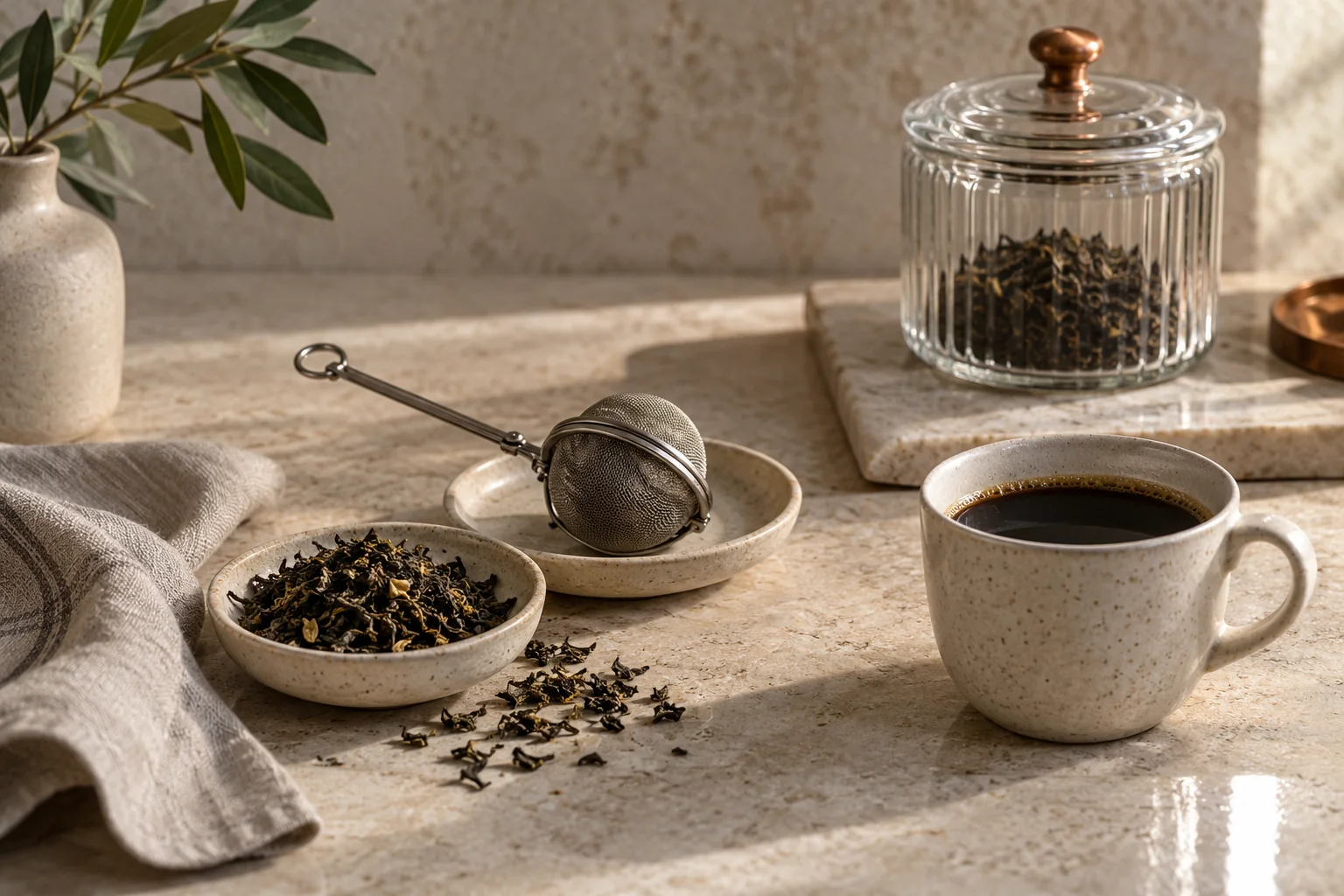
Harney English Breakfast uses three different hot-preparation measures
- 01Sachet12 fl oz
One sachet for this named mug instruction
- 02Tea bag8 fl oz
One bag for this named cup instruction
- 03Loose tea8 fl oz
One teaspoon, identified as 2.5 g, with a suitable filter
These are not green-tea, concentrate or universal mocktail instructions
The drink recipe says “chilled tea.” The box in your hand says “20 sachets.” Before counting either as twenty drinks, find the missing instruction: how that particular tea is meant to be prepared.
Loose leaves can suit someone who already has a filter. Bags can remove a small preparation step. Neither format is automatically the more serious choice for a mocktail, and the package count alone does not settle the amount of usable tea you will have.
A sachet is not always the same unit as a tea bag
Harney & Sons' English Breakfast page gives different hot-brewing measures: one sachet for a 12 US fl oz mug, one tea bag for an 8 US fl oz cup, or one teaspoon of loose tea, identified as 2.5 g, for an 8 US fl oz cup. It specifies 212°F water and five minutes for this black tea.
Those are the maker's instructions for the named product, not a rule for green tea, every brand's sachets or every mocktail. The immediate shopping lesson is that a twenty-count sachet tin and a twenty-count tea-bag box need not represent the same preparation instructions.
Keep the format beside the tea name in your notes. A retailer's shortened title can hide the detail you need most.
Work backward from the liquid your recipe asks for
A drink that needs a measured amount of chilled tea requires that prepared liquid, not a guessed number of bags. Identify the tea, use its applicable brewing method, remove the leaves or bags, and measure the usable tea before allocating it to drinks.
Here is a hypothetical planning example, independent of any recipe: six glasses using 2 US fl oz of prepared tea each require 12 US fl oz of that tea. If you prepare 16 US fl oz, the nominal difference is four ounces before any handling losses. Neither number tells you how many bags to use until the relevant brewing direction is known.
This is also why replacing a named green tea with an English Breakfast black tea is a recipe change. A guide to package formats should not quietly authorize that substitution. Choose a documented drink that uses the tea you want, or keep the original tea attached to the source formula.
Chilled tea and iced tea can describe different preparations
Harney's general iced-tea guide discusses brewing a concentrate with less water and then adding cold water and ice. Its English Breakfast page gives its own double-strength iced instruction. The Fresh Brew Organic Plain Black page's base two-quart method uses one pouch, two cups of boiling water, fifteen minutes, then six cups of cold water and removal of the pouch as directed.
That same US page flags an important exception: the box of 50 contains one-gallon pouches and requires double the water. Do not apply the two-quart instruction to that box. A matching tea name and pouch format still need the correct pack variant; twenty bags, fifteen pouches and fifty larger pouches are not comparable serving counts.
These are separate preparation routes. A large iced-tea pouch is not a single-cup bag that happens to look larger. Nor should a concentrate be poured into a recipe calling for prepared tea without accounting for the water its method still requires.
For a mocktail that will later receive syrup, citrus or more ice, use the tea preparation specified by its source when available. A general “make it stronger” idea does not supply a tested correction to that drink. If the recipe leaves tea strength undefined, say so rather than claiming an exact replication.
Buy the filtration you actually need
Loose tea needs a way to separate leaves from liquid unless the relevant method says otherwise. An infuser used during brewing and a strainer used afterward solve different handling problems. Check that your existing arrangement is intended for the temperature and vessel involved.
A bag or sachet provides its own leaf container, but you still need to remove it at the appropriate step. More steeping time is not automatically a substitute for a missing bag or an unknown tea dose.
For occasional drinks, the format that works with your current kitchen may be the sensible buy. You do not need a new teapot, a decorative scoop and a second filter to make the shopping feel complete. Our compact home-bar approach starts with repeated uses, not a collection of equipment.
Leave the package count out of the serving claim
Once you have selected a method, count the portions of prepared tea the chosen drink actually needs. Then check the package and any other ingredients. That order prevents a box of tea from becoming a promise of twenty complete mocktails.
Cooling and storage belong on the preparation plan too. Use a suitable covered vessel and the applicable handling directions; a cold-looking photograph does not establish a holding period. Tea also retains its own caffeine question, irrespective of the non-alcoholic base used later. This guide does not calculate the caffeine in a finished drink.
Choose loose leaves when their measuring and filtering fit your routine. Choose the appropriate bags or pouches when those instructions make the job simpler. The useful upgrade is a clear method, not a more impressive-looking tin.
For a full preparation timeline, see why a tea pitcher starts before the pitcher rather than treating the dry tea as ready liquid.
- Harney & Sons — English Breakfast brewing by format
- Harney & Sons — How to Brew Iced Tea and Organic Plain Black Fresh Brew Iced Tea