Hosting & Gifts · Pour ratio
A Mocktail Swap Can Keep the Original Two-to-Three Ratio
The mocktail substitution preserves a two-to-three ratio while leaving glass size open.
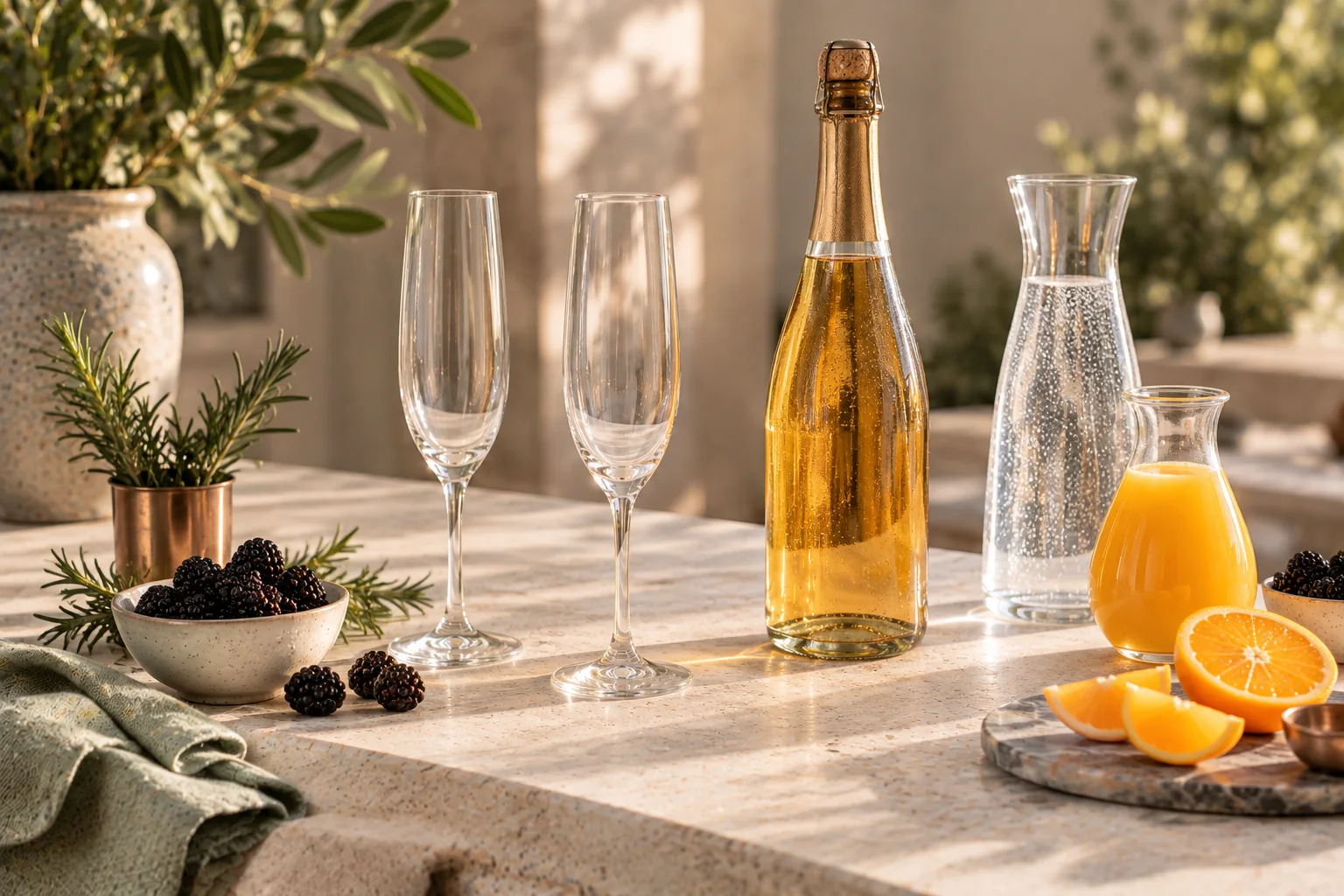
Martinelli's Berry Bubbly is an alcoholic recipe in its primary form: two parts Sparkling Apple-Pomegranate Cider to three parts Prosecco or Champagne. The same card then gives an explicit mocktail option: replace the Prosecco with soda water. That little line matters. It is the producer's own non-alcoholic route, not an editor quietly deleting an ingredient and declaring the recipe finished.
The page says “Serves 1” but measures the liquids in parts, without assigning a fixed glass volume. A part is a ratio unit, not a bottle size. We can translate the published ratio into example pours while keeping the producer's missing volume visible.
Decide the pour size, then do the arithmetic
Two plus three equals five parts. For a hypothetical 5 fl oz liquid pour, one part would be 1 fl oz: use 2 fl oz Sparkling Apple-Pomegranate and 3 fl oz soda water for the producer's mocktail swap. For a hypothetical 10 fl oz liquid pour, one part would be 2 fl oz: use 4 fl oz cider and 6 fl oz soda water. Neither five nor ten ounces is a size Martinelli's instructs; the examples show how to preserve its ratio once you select a serving volume. Ice, fruit and headspace still affect what fits in a real glass.
The garnish list includes fresh blackberries, rosemary and optional lime, but no count of berries or sprigs per serving. Six five-ounce example pours would require 12 fl oz cider and 18 fl oz soda water, plus garnishes. Six ten-ounce example pours would require 24 fl oz cider and 36 fl oz soda water. Those are different shopping trips even though both follow the same two-to-three ratio. A 25.4-ounce bottle, if that is the exact variant sold, would cover the cider portion of the second calculation on paper, but one should check the actual bottle format rather than transferring a size from another Martinelli's product.
The method pours cider into a flute, adds the sparkling second component and finishes with garnish. The page's sentence about the mocktail replaces Prosecco, not the cider. Do not carry the original wine ingredient into the alcohol-free shopping list, and do not call a glass made with Prosecco a mocktail merely because the card has a mocktail option. This is a frequent failure of skim-reading a recipe with two branches.
Write soda water explicitly on the mocktail shopping list. It is the three-part ingredient, so a host who buys only the specialty cider has less than half of the planned liquid volume. The recipe also does not provide an alcohol statement for every cider package that might share a similar name. If a particular threshold matters to a guest, verify the exact current bottle independently of this recipe's optional substitution.
“Parts” are friendly once you write the question they leave open: How large is each glass? Choose the size and check the vessel, then use the ratio for a transparent bottle and soda-water plan. The ratio is published; the serving volume is your explicit planning assumption. Keeping those two kinds of information apart makes the guide useful without fabricating a producer yield.
- Martinelli's, Berry Bubbly
- NIST, Metric Kitchen: Cooking Measurement Equivalencies