Learn · Ingredient decisions
Ginger Juice and Ginger Syrup Do Different Jobs
Read the two ingredient lists and spot when a recipe measures a prepared mixture rather than the retail syrup.
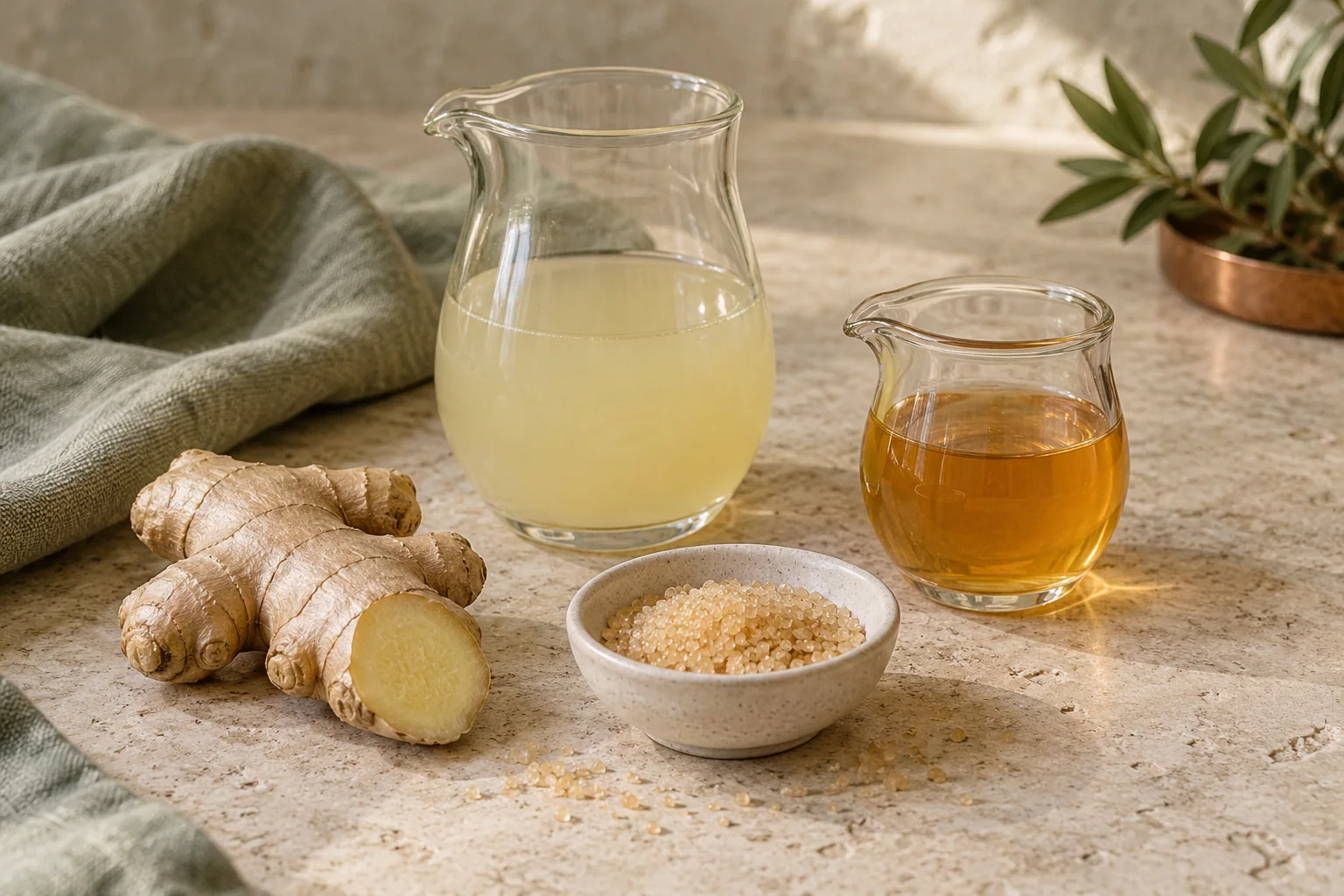
Two US product lists, plus a possible intermediate preparation
- 01JuiceIdentify
Ginger and citric acid in the named bottle
- 02SyrupRead
Cane sugar and ginger in the named syrup
- 03Prepared mixtureTrace
A service measure may refer to a further infused preparation
Eight US fluid ounces and 247 ml conflict on the syrup page; check the package
You have ginger syrup in the cupboard, but the recipe asks for ginger juice. Both bottles put ginger within easy reach. That does not make them two ways to measure the same ingredient.
The distinction is especially useful when shopping for a drink that already includes a sweetener. Substituting syrup can change that part of the formula as well as the ginger component. Before trying to fix the drink with another adjustment, check whether you have bought the ingredient the source actually names.
Start with two ingredient lists
The Ginger People's US Organic Ginger Juice lists 99% ginger and citric acid. Its Organic Ginger Syrup lists organic cane sugar and organic ginger. The maker says no sugar or water is added to the juice. That is not the same as a nutrition claim that ginger juice contains no naturally occurring sugar.
These particular products establish a useful boundary: the syrup includes cane sugar; the juice has a different ingredient identity. The lists do not reveal a reliable juice-to-syrup conversion or prove how any finished drink will taste.
A ginger shot, ginger beer and ginger ale are not substitutes by default either. Identify the exact bottle before deciding whether a recipe fits what you own. This is a concentrated-ingredient question, separate from choosing a carbonated ginger mixer.
See where each bottle enters a real recipe
The maker's Ginger Turmeric Lemonade lists 1 US fl oz ginger juice in a larger preparation that also includes turmeric juice, lemon, honey or agave, and water. The sweetener remains a separate ingredient. Do not silently remove the turmeric or rename the result as the source's ginger-only lemonade.
Its Ginger Lemongrass Mint Spritzer starts differently: one cup of ginger syrup is combined with water, lemongrass, mint and lemon, then simmered, steeped and strained. The glass receives a measure of that prepared mixture, not necessarily the same measure poured straight from the retail syrup bottle.
Those examples answer the shopping question without requiring a full recipe transcription: one uses the juice as a component; the other turns the syrup into a further preparation. Keep the complete source card if you decide to make either drink.
Do not confuse the bottle with the prepared syrup
An instruction to add a tablespoon of prepared spritzer syrup can be easy to misread as a tablespoon of the commercial ingredient. Look back one step. If herbs, water and other ingredients entered a saucepan first, the measure at service belongs to the resulting mixture.
That matters for shopping totals. The retail bottle supplies an input to the preparation, while the glasses draw from its finished output. Without a stated finished yield, you cannot jump from one to the other and announce an exact number of drinks per bottle.
It also changes your equipment list. An ingredient that looks ready to pour may still need a saucepan, straining arrangement and cooling time for the chosen recipe. If that is more work than you want, choose another documented drink rather than skipping those steps and keeping its name.
Keep the conversion on the right side of the recipe
Suppose your selected recipe explicitly asks for 1 US tablespoon of bottled ingredient per glass. Eight repeats require eight tablespoons, or ½ US cup. This is an invented measurement example, not a recommended dose for either Ginger People product.
The same arithmetic applies to an explicitly measured prepared ingredient, but it does not tell you how much commercial syrup was needed to make it. The identity beside the measure is as important as the multiplication. The liquid-measuring guide helps keep tablespoon, cup and fluid-ounce instructions consistent once that identity is settled.
Avoid a percentage-based shortcut too. Knowing that a juice is 99% ginger does not tell you what amount of a sweetened syrup would provide an equivalent drink. The syrup page does not supply an exchange formula, and ingredient percentages would not by themselves predict a sensory match.
Check the bottle size and its own handling
There is an unresolved unit problem on the US syrup page: it gives 8 fl oz and 247 ml together. Those are not equivalent US liquid volumes; eight US fluid ounces are about 236.6 ml. Check the received package rather than building a precise yield from that inconsistent pair.
The juice page separately says to shake before use and refrigerate after opening, with a two-month freshest-flavor recommendation. That guidance belongs to the bottled juice, not to a mixed lemonade or the prepared spritzer component. Do not transfer a storage window across preparations.
The smallest useful purchase is the ingredient your chosen recipe calls for, in a package whose size you can resolve. Keep any separate sweetener on the list, identify intermediate preparations, and resist turning “ginger” into an all-purpose substitution instruction.
- The Ginger People US — Organic Ginger Juice and Organic Ginger Syrup
- The Ginger People US — Ginger Turmeric Lemonade and Ginger Lemongrass Mint Spritzer