Learn · Ingredient decisions
Matcha Powder or Matcha Latte Mix for a Drink
The green powder may contain tea alone or tea and sugar; its own directions decide the starting measure.
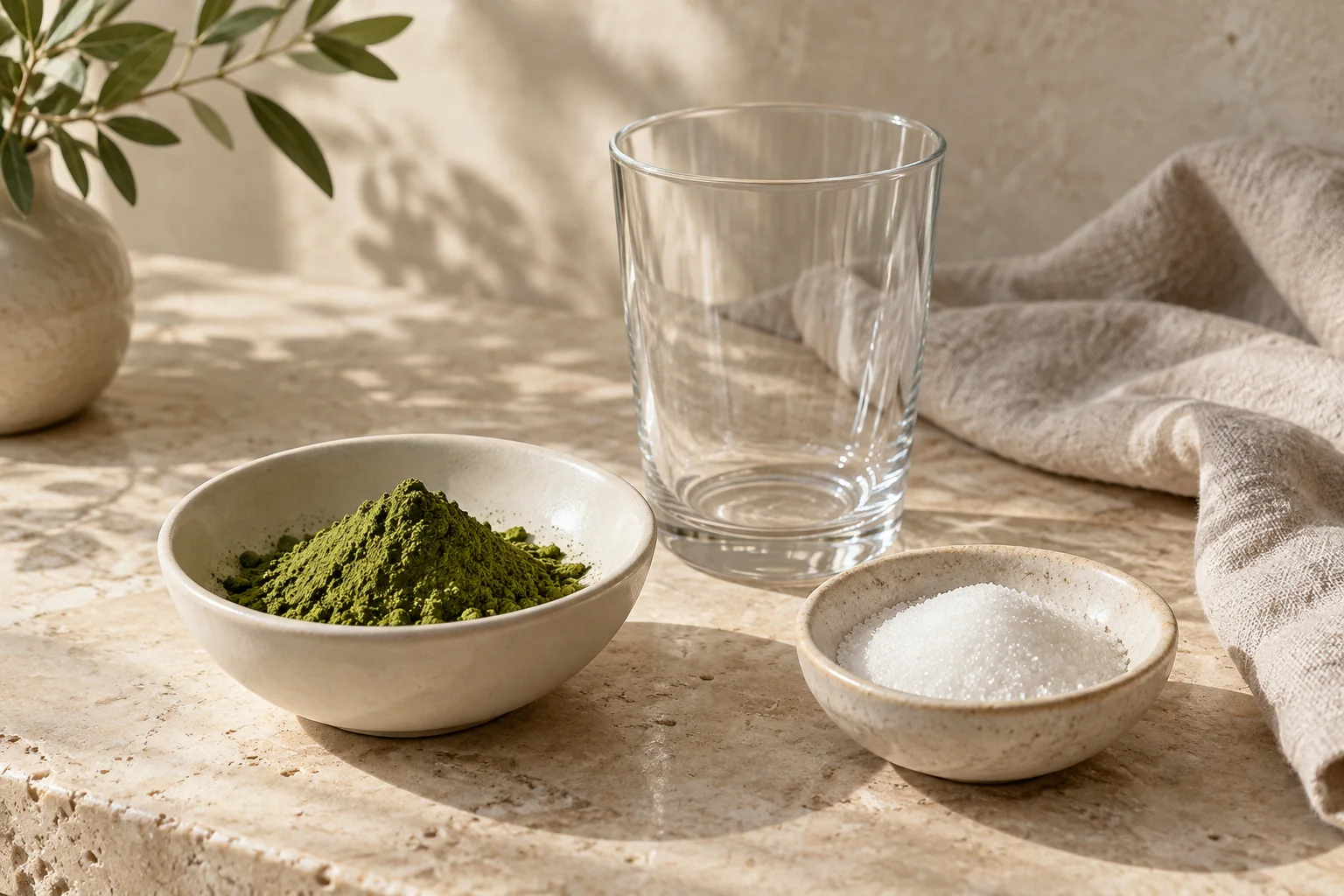
Jade Leaf gives separate starting preparations
- 01Culinary powder½ tsp
With 2 US fl oz water before finishing liquid
- 02Original latte mix2 tsp
With ¼ US cup warm water before milk
- 03Equivalent teaUnknown
The tea-to-sugar ratio in the mix is not disclosed
These are not equal tea doses or equal-volume finished drinks
Two green powders sit beside each other on the shelf. One is matcha. The other is a matcha latte mix. The difference is easy to overlook until a drink recipe asks for a small spoonful and you discover that the spoonful might contain more than tea.
For a recipe-led drink, start with the ingredient list rather than the shade of green, the word premium or the photograph of a finished latte. A convenient mix can be the right purchase. It is simply a different purchase from plain matcha powder.
One maker, two distinct products
Jade Leaf's US Organic Culinary Matcha lists 100% organic Japanese matcha green tea powder. Its Original Sweetened Matcha Latte Mix lists organic unrefined cane sugar and organic matcha green tea. The mix's ingredient list does not disclose the proportion of tea to sugar.
That distinction is enough to reject a tablespoon-for-tablespoon assumption. You cannot calculate how much plain matcha or separate sugar a spoon of the mix replaces from those two ingredient names alone. A green powder is not a standardized unit of tea.
It also means that “latte mix” does not necessarily mean powdered milk. This particular mix lists sugar and tea, then asks the user to add milk separately. Other products need their own ingredient check; the category name cannot establish their complete composition.
Read each product's preparation independently
Jade Leaf's culinary powder directions start a beverage with ½ teaspoon powder mixed with 2 ounces of water, then combined with hot or cold water or milk. The Original Latte Mix directions instead start with 2 teaspoons mix and ¼ cup warm water, before adding hot or cold milk.
These are two product-specific starting instructions, not equivalent matcha doses. They also leave the finishing liquid amount open on those product pages. Neither supplies a complete, fixed-volume mocktail recipe or tells you to add citrus, syrup or a spirit alternative.
ITO EN's US Barista Craft Blend similarly describes matcha pre-blended with sugar for hot or cold beverages. Its page supports the distinction between tea and a sweetened mix, but does not establish the same formulation as Jade Leaf. Do not turn agreement on a category into agreement on a recipe measure.
A larger scoop can contain less information
Suppose a documented drink asks for one teaspoon of plain matcha. Replacing it with one teaspoon of latte mix changes the ingredient without telling you the amount of matcha now present. Adding a second spoon does not solve that missing proportion; it also adds more of the mix's other ingredient.
The sensible route is to use the named powder or find a documented drink developed for the mix you have. That avoids buying several sweeteners to compensate for a substitution you cannot quantify. A drink can be simple without treating every ingredient as interchangeable.
For the same reason, do not delete another syrup from a recipe merely because the powder is sweetened. That syrup may carry a named flavor as well as sugar. Removing it would create another variation, not a proven correction.
Count preparations without inventing their final size
As a check of the published starting measures, four culinary-powder preparations require 2 teaspoons powder and 8 US fl oz water before any finishing liquid. Four Original Latte Mix preparations require 8 teaspoons mix and 1 US cup warm water before the milk.
Those are ingredient totals, not four equal-volume finished drinks. They do not establish equivalent tea content or sweetness. Neither calculation permits doubling an appliance load or promising a pitcher method that the source has not provided.
Use consistent kitchen measures for the instruction you actually follow. Package weight does not supply a teaspoon count unless the relevant dose weight is known. A large bag's headline serving range should not replace the measure in your chosen recipe.
Match the purchase to the job you want
Plain powder makes sense when the recipe specifically names matcha and treats its other ingredients separately. A latte mix makes sense when you want to follow that mix's own preparation. Neither needs to be declared universally better, more authentic or healthier to justify choosing it.
Before buying a large package, identify a realistic second use and check its handling instructions. Keep the product's exact variant on the list: Original, flavored and sugar-free mixes are not automatically the same formulation. A familiar brand logo is not enough to approve a substitute.
Caffeine and any guest's ingredient restrictions remain separate label questions. This comparison neither estimates a completed drink's caffeine nor repeats energy, recovery or other functional claims. Its purpose is to make your next preparation less ambiguous.
The cleanest decision is the one you can explain in a sentence: this is the powder the recipe uses, or this is the mix whose instructions you intend to follow. Buy that ingredient, keep its measure attached, and let the rest of the drink stay deliberate.
If caffeine matters to the choice, look for the actual ingredient and amount information rather than inferring it from a green powder’s name.
- Jade Leaf US — Organic Culinary Matcha and Original Sweetened Matcha Latte Mix
- ITO EN US — matcha LOVE Barista Craft Blend Sweetened Powder Mix