Hosting & Gifts · Shared service
Serving Alcoholic and Non-Alcoholic Drinks at the Same Party
Name the drinks, separate the work and keep product information available after the first glass leaves the tray.
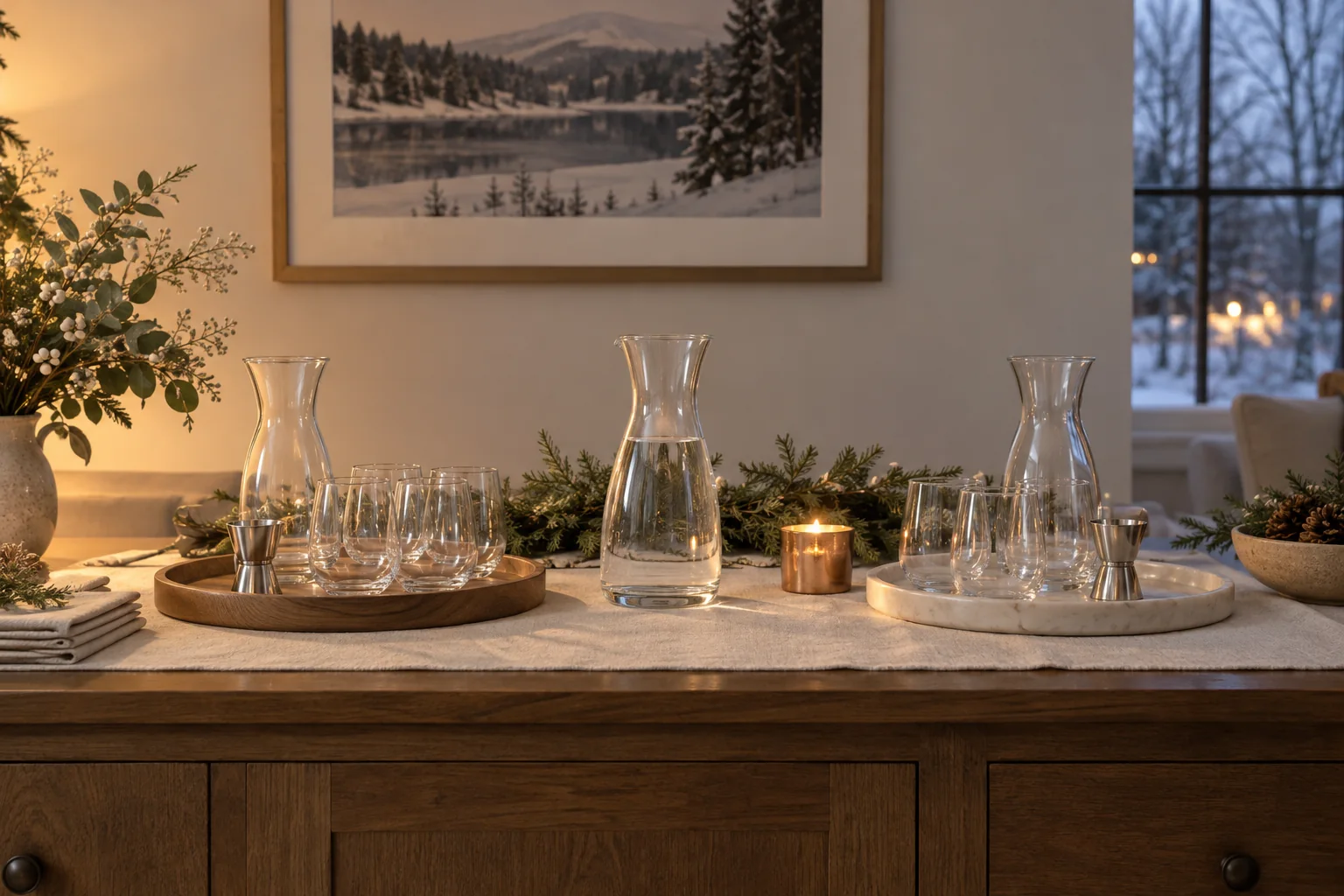
An editorial service layout, not a tested safety protocol
- 01Non-alcoholic routeName it
Recipe and exact product statements available
- 02Other routeSeparate tools
Agree the work before a helper takes over
- 03WaterEasy access
A choice that needs no explanation
Color, garnish and glass shape do not identify a drink's alcohol content
Two tall glasses, two lime wheels and two clear drinks can look almost identical. At a party serving both alcoholic and non-alcoholic options, the useful distinction belongs in the service plan, not in a guest's ability to recognize a garnish.
Give each route a name, keep the products identifiable and make the information easy to find without a conversation across the room. None of that requires a second elaborate bar. It does require deciding what happens after a bottle becomes a glass.
Start with the drink names
“The green tray” is an instruction about furniture. It is not a drink description. A small written card can name the recipe, identify its base and mixer, and preserve the manufacturer's exact alcohol wording when it is relevant. A color can help people find the card, but should not be the only distinction.
For example, a card for Ritual's published G&T can name Ritual Gin Alternative and tonic rather than simply promising “gin and tonic, no alcohol.” The product statement and the recipe title answer different questions. If someone wants a particular threshold, show the exact information rather than translating the whole tray into 0.0%.
That does not mean every guest owes the host an explanation. Offer the drink and its information in the same matter-of-fact way you would offer still or sparkling water. A guest can choose, ask or decline without their reason becoming a party topic.
Give the two routes their own space
A workable editorial layout for an ordinary sideboard is three small spaces: the named non-alcoholic drink with its ingredients and measure; a separate alcoholic service area with its own ingredients and tools; and water within easy reach. Keep the drink cards beside the corresponding bottles, where the person pouring can read them.
The trays help organize the work. The written descriptions identify the drinks. Neither the tray material nor the liquid's color proves what a glass contains. Do not use a pale drink as shorthand for non-alcoholic or a dark drink as shorthand for alcoholic.
Separate measures and serving utensils make the work easier to follow when two people help. Agree which tool belongs to which route before the first pour. This layout organizes service; it cannot establish a finished glass's alcohol content or guarantee that ingredients have stayed separate.
If space is too tight for a second mixed route, individually identified ready drinks may make the non-alcoholic side simpler. Choose a format that reduces the host's work instead of making the table look more ambitious than it can operate.
Keep information through the handoff
The label is useful while the bottle is on the tray. Once someone takes an unmarked glass to the sofa, that information no longer travels with it. Avoid pre-pouring a row of anonymous look-alike drinks and expecting guests to remember which row was which.
An easier handoff is to make the drink to order, name it as you give it to the person and avoid topping up an unidentified glass. If a helper takes over, show them the recipe card and ingredients rather than giving them only the color code. An unfamiliar bottle is a reason to pause and identify it, not to assume it is the base from the previous round.
These choices are especially useful for a toast, when several glasses may leave the service area at once. Keep the two options distinct in the way they are offered. The same champagne-shaped glass can hold several kinds of beverage; its shape is not a label.
A carafe changes the information problem
A decanter or pitcher can look elegant while removing the only visible product name. If you use one, keep the original product information available and identify the contents beside the vessel. Do not infer a finished mixture's storage instructions from the unopened base bottle.
The service plan also does not authorize making a pitcher from a single-glass recipe. Ritual's G&T, for example, is built over ice in the glass. A written label does not turn it into a sourced batch method. Follow the method you selected and choose another documented drink if the occasion needs a pitcher.
For the wider layout, give ready drinks, mixed drinks and water their own practical jobs. This article adds the identity problem of a mixed alcoholic/non-alcoholic event; it does not require doubling every shopping quantity.
Make changing your mind easy
An adult who chooses one route early in the evening may choose another later. Keep the next choice clear without implying that the change needs a justification. Water should be available without a special request, and a sealed ready option can be useful when the host is occupied.
The aim is not a display worthy of a cocktail competition. It is a party where the person handing over a glass knows what it is, the person receiving it can find the relevant information, and neither has to reconstruct the answer from a lime wheel. Separate the work, name the drinks and keep the information attached to the choice.
- Ritual Zero Proof US — Gin & Tonic and Gin Alternative